Rechercher dans ce blog

Sunday, May 8, 2022

MLB home runs are way down so far in 2022; here's how the league's recent tinkering deadened the baseball - CBS Sports

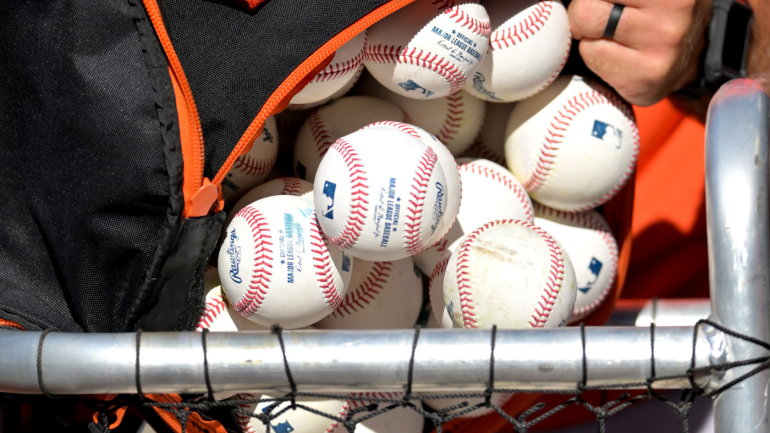
baseballs-getty.png
Getty Images

Tuesday night at Dodger Stadium, Dodgers center fielder Cody Bellinger laid into a center-cut 94 mph fastball from Giants righty John Brebbia. The pitch jumped off the 2019 NL MVP's bat at 102.3 mph and sailed toward center field ... and then it just died. Mauricio Dubón made the catch with relative ease a few steps in front of the wall. 

"Gimme a break," Dodgers broadcaster Joe Davis said.

"It's the ball," Duane Kuiper quipped on the Giants broadcast.

"I thought Bellinger's ball was out," Dubón told Evan Webeck of the Bay Area News Group after the game. "Then it looked like it hit a wall. I was getting ready to jump, and it just died at the end."

Bellinger's drive looked gone off the bat because the last few seasons have conditioned us to expect balls hit like that to carry over the wall for a home run. This year, these well-struck balls are more frequently coming up short, and settling into outfielders' gloves. Home runs are down early in 2022 and not by a tiny little bit either. Teams are averaging 0.90 homers per game, down from 1.22 last year and 1.39 in 2019, the year MLB set all sorts of home run records

Suffice it to say, MLB's recent history is rife with inconsistency when it comes to the properties of the actual, physical baseball itself. This has resulted in a great deal of unpredictability from year to year, especially when it comes to home run rates. 

Now let's undertake a brief chronicling of how the ball has changed over the last half-decade-plus or so, which will set the scene for a deep dive into the 2022 season thus far. 

2015

In 2014, MLB teams averaged 0.86 home runs per game, but in 2015 that figure vaulted to 1.01 per team, per game. So what happened? ESPN Sport Science obtained a sample of baseballs used from 2014-15 and another of balls used from 2016-17 and, with an assist from the USC School of Medicine, ran them through a CT scan. They found that the 2016-17 baseballs had a significantly less dense cork-and-rubber core than the earlier baseballs. A subsequent analysis by Kent State University researchers discovered that the newer baseballs had slightly more silicon in the core than the older sample. The baseballs became a bit bouncier, and a lower seam height meant less resistance as the baseballs traveled through the air. All those factors combined made the baseball much livelier. This "juiced" ball probably landed in the hands of MLB pitchers in the second half of the 2015 season, which explains the overall increase in home run rate for 2015. That rate ticked up to 1.16 in 2016 and 1.26 in 2017 and then eased back down to 1.15 in 2018. 

All of this prompted MLB commissioner Rob Manfred in August 2017 to bring together various experts in the fields of physics and quantitative analysis to try to find out what was going on. The committee focused its efforts on studying the physical properties of the baseball, weather and climate conditions, and player behavior. In addition to using Statcast data and conducting controlled experiments involving 180 unused official baseballs that dated from 2013 to 2017, the committee also inspected Rawlings' production plant in Costa Rica. In broad terms, the committee found that baseballs were experiencing less drag in the air, which allowed them to travel farther, but they couldn't pin down a reason for the change. The report indicated that the "pill" of the baseball, or the core, may have been better centered during manufacturing than it was in years past. That improved symmetry may have helped the ball carry farther. 

Then, however, 2019 happened. 

2019

For the 2019 season, teams averaged a record 1.39 home runs per game, which in turn yielded a record tally of 6,776 home runs for the year. Perhaps prompted by an outcry among pitchers, MLB undertook another fact-finding mission centered on the baseball itself. The report, released in December 2019 and authored by a committee of four scientists, concluded: 

"Analysis of StatCast data shows that the increase in home run rate between 2018 and 2019 was due in part to a change in launch conditions and in part to a change in the baseball drag. The increase due to changes in launch conditions was determined to be due to a change in player behavior rather than to changes in the baseball. ... The laboratory experiments, using newly developed techniques, show a correlation between drag and seam height, with the average seam height in 2019 smaller than that in 2018 by less than 0.001 inches."

Specifically, the committee found that roughly 40 percent of the increase in power was due to a widespread "change in player behavior," which refers to increasing emphasis of hitters on achieving a launch angle off the bat that's ideal for power production. The rest, they posited, was due to seam height.

That, however, was not the final word. Astrophysicist Dr. Meredith Wills, who has emerged as the leading independent authority on the state of the baseball, conducted her own examination of the 2019 baseball relative to earlier models and presented her findings in a June 2019 piece for The Athletic. She hypothesized that Rawlings, starting with the 2019 batch, began machine drying the baseballs whereas before they allowed baseballs to air dry. That, in turn, perhaps allowed Rawlings to better meet MLB's increased demand for baseballs (Triple-A used MLB baseballs in 2019, and, just as in MLB, home run rates vaulted). The physical changes she found in the baseballs starting in 2019 are consistent with what would happen if you applied heat to a baseball to speed up the drying process. Dr. Willis' findings didn't exactly align with those of the MLB-assembled panel while at the same time reinforcing the fact that the ball changed prior to the 2019 season. 

The 2019 postseason

Then something happened between the latter weeks of the regular season and the start of the 2019 playoffs. The power numbers during the playoffs dropped so dramatically that something beyond just small sample size noise almost had to be at work. Indeed, the Cardinals' front office found that during the LDS round, balls were carrying about 4.5 fewer feet than balls of a similar contact quality were during the regular season. 

So what happened? That December 2019 report commissioned by MLB stated that drag -- or how the air works against a baseball flying through it -- increased in the postseason but that a reason for that wasn't exactly clear. Dr. Willis, though, found a reason. As she wrote for The Athletic, MLB very likely ran out of 2019 regular-season balls -- thanks to increased in-game usage plus additional authenticating of game balls for memorabilia sales, in addition to using MLB balls at the Triple-A level in 2019 -- which meant that the league had to use some older balls during the 2019 postseason. Those older balls weren't as "juiced" as the 2019 regular-season batches. 

2020 and 2021 

Over the past two seasons, the first of which was heavily abbreviated because of COVID, the ball was still pretty lively in terms of home run rates, albeit not quite to the extremes of the 2019 regular season. This is likely the result of tweaked manufacturing processes by Rawlings (which is owned by MLB) designed to produce a more consistent ball that resides at or near the midpoint of specifications. As well, the gradual increase in the number of teams storing baseballs in a humidor also likely contributed to the modest "deadening" effect. 

Going into the 2021 season, MLB told teams they could expect a less lively ball for that year. However, Bradford William Davis of Business Insider reported in November of last year that Dr. Willis discovered the use of two different types of baseballs in 2021. One was the lighter ball designed to carry less and the other was a batch of heavier, livelier balls. MLB blamed supply-chain disruption caused by the pandemic for the mixing of batches. Whatever the reasons, it was a frustrating dynamic for pitchers and batters alike. 

All of that chaos set the stage for the state of the baseball in 2022. 

2022

MLB wants more contact and more balls in play, and more action on the field in general. The thinking is that, by deadening the ball and making home runs harder to hit, batters will instead focus on contact. Sensible. The only problem is that adjustment can't be made overnight, and now a bunch of would-be homers are becoming fly outs, and offense is down around the league. Teams are averaging 4.04 runs per game in 2022. Scoring hasn't been that low in a full season since 1980 (4.00 runs per game).

Rob Arthur has meticulously tracked the baseball's drag over the years -- drag is a component that determines how much the air slows the ball down in-flight -- and found the drag on the 2022 baseball is way up. From Arthur:

Through about two weeks so far this season, it appears we are on track for a high-drag, and thus low-homer, year. That dovetails nicely with other studies on the topic that are finding home run rates quite reduced, even adjusting for the weather, as well as other investigations of the baseball and home run rates by two researchers helping MLB study the topic, Alan Nathan and Jim Albert. In raw (non-weather-adjusted) terms, we are seeing the lowest rate of balls leaving the park since 2014, though that will creep up as the summer brings warmer, less dense air for the smashed baseballs to travel through. 

This is best shown with barrels. A barrel is essentially the best possible contact in terms of exit velocity and launch angle. They're batted balls that produce a batting average north of .500 and a slugging percentage of at least 1.500, and they often come in way higher than that. Here are the MLB averages on barrels in the Statcast era (2015 to present). 


Average exit velocity Average launch angle Average distance Slugging percentage

2015

102.6 mph

27.9º

400 ft

2.948

2016

102.7 mph

27.9º

400 ft

2.935

2017

102.7 mph

27.8º

402 ft

3.111

2018

102.8 mph

27.9º

397 ft

2.901

2019

102.9 mph

27.9º

401 ft

3.152

2020

103.0 mph

27.9º

403 ft

3.161

2021

103.4 mph

27.9º

400 ft

2.952

2022

103.3 mph

27.9º

394 ft

2.492

The exit velocity keeps going up (because batters are hitting the ball harder with each passing the year the same way pitchers keep throwing harder) and the launch angle has held steady, yet the average distance on barrels has dropped six feet this year. Six feet! Do you know how much six feet is? Six feet is the difference between Bellinger's rocket being a home run and an out.

On this specific subset of batted balls -- there are thousands of barrels around the league each year, so it's not a small sample -- batters are hitting the ball harder than ever and at the same launch angle, yet the ball is not traveling as far. Changes to the baseball itself are the most straightforward explanation, though it should be noted they're not the only possible explanation.

For the first time MLB is storing baseballs in humidors at all 30 ballparks this season. Last year 10 teams used the humidor in their home ballpark: the Astros, Blue Jays, Cardinals, Diamondbacks, Mariners, Marlins, Mets, Rangers, Red Sox, and Rockies. Now all 30 clubs have a humidor, and the humidor brings the ball to average humidity. It dries out the ball in humid climates and "wets" it in dry climates. The drier the baseball, the more it flies.

Using the humidor in all 30 parks brings consistency to the baseball, at least in theory. There are so many variables in play that are impossible to quantify. How the ball is transported from the Rawlings factory in Costa Rica to each MLB city, how long the ball is stored in the humidor, and all sorts of other stuff matters quite a bit. Every time a baseball warms up and cools down, its physical properties change. Everything in the ball (the leather, the cork, etc.) experiences wear and tear, for lack of a better term.

The humidor has the most impact in extreme climates like swampy Florida (even in a dome) or the Arizona desert, but it can make some amount of difference everywhere. The 10 ballparks that used the humidor last season function as a control group. Here are the home runs per ball in play numbers:


2021 humidor parks 2021 non-humidor parks

2021 HR/BIP

4.5%

5.1%

2022 HR/BIP

3.8%

3.5%

The home run rate in the 10 parks that used the humidor in 2021 is down 0.7 percentage points. It's down 1.6 percentage points in the other 20 parks, the parks that did not have humidor in 2021 but do have one in 2022. If we say the 0.7 percentage point decline is a result of the ball being changed, then the other 0.9 percentage points are the result of the humidor.

It's not quite that simple, of course, but clearly the humidor is having some affect on home runs. And that affect may change. It is only May 5. The weather will warm up in the coming weeks and soon it will be stick-to-your-seat humid in many MLB cities. The ball will behave differently because the climate will be different, so the humidor will change the properties of the baseball even more.

Last year MLB said the "2022 season will be played with only balls manufactured after the production change," meaning the deadened ball we were supposed to get in 2021. That appears to have happened. An additional 20 teams are using a humidor now, and while the humidor doesn't automatically lower the home run rate (it could raise it in some climates), it is more likely to lower it given the fact baseball is largely played outdoors in the summer.

Bottom line, the baseball is not carrying the same way it did the past few years. The home run rate is down significantly early in the season, and because hitters have yet to adjust, offense is way down too. The season is still young and we need a lot more data before we have a full understanding of how this baseball works and the humidor's impact. The early returns suggest a return to 2013 and 2014, the last time teams averaged fewer than a home run per game, and offense was this low league-wide.

Adblock test (Why?)


"ball" - Google News
May 07, 2022 at 05:31AM
https://ift.tt/2gCNfMZ

MLB home runs are way down so far in 2022; here's how the league's recent tinkering deadened the baseball - CBS Sports
"ball" - Google News
https://ift.tt/LBUIRqu
Shoes Man Tutorial
Pos News Update
Meme Update
Korean Entertainment News
Japan News Update

Friday, May 6, 2022

Despite valiant effort, Ball State falls to Hawai'i in five-set thriller - BallStateSports.com

LOS ANGELES - Despite a valiant effort, the Ball State men's volleyball team saw its 2022 season come to an end Thursday night with a 3-2 (28-26, 19-25, 20-25, 25-20, 15-11) setback to No. 1 Hawai'i in the semifinals of the 2022 NCAA Men's Volleyball Championship inside UCLA's Pauley Pavilion.

"Obviously, a little bummed about that loss but for our path and our journey this season, to be able to fight the defending champions the way we did, in five, I thought we had some good plays there," head coach Donan Cruz said. "They just made a few more than we did. As we think about the growth and the year, to be able to get this point, simply what we spoke about in that last huddle was, 'There's really nothing to hang our heads on.' Although this stings at this moment, as a group, moving forward, these are the things that really get us to that championship mindset.

"We talk about it a lot. Part of playing the game is you can win and you can lose. Tonight, you saw two really great teams go after it. And that's the defending champion. I thought we represented Ball State in the best way possible and played consistently at a very high level throughout the year, and we don't get to this point without doing that."
 
Battling the top-ranked Rainbow Warriors (26-5) for a third time this season, the championship's second-seeded Cardinals (23-4) fell just shy of the program's first-ever berth into the national championship match.
 
After winning the first two meetings between the programs, both of which were played in Worthen Arena in late January, Ball State found itself down 12-5 early in the opening set. The Cardinals would battle back, however, tying the score at 24 before reaching set point on a service ace from Nick Martinski.
 
Hawai'i was able to escape with the set victory, however, which proved crucial in the match. Ball State would go on to take sets two and three, only to see the Rainbow Warriors win the final two frames to continue its bid for back-to-back national championships.
 
Kaleb Jenness led the Cardinals with 18 kills in the match, while Angelos Mandilaris was right behind with 15. Overall, Quinn Isaacson guided the Ball State attack to a .262 rate of success, dishing out 40 assists to go along with a pair of kills of his own.
 
The Cardinals defense also held a decisive advantage at the net, tallying 19 total blocks to 10 from Hawai'i. Felix Egharevba led the way with nine total blocks, while Mandilaris and Vanis Buckholz added seven apiece.

"Proud of our team, proud of our fanbase," Cruz added. "There's not anything more we could ask, other than we're going to move forward and grow from this moment. Obviously, Quinn and a few of our other guys are moving on to other things. We told them how proud we are of how they represented this university and this team, and know that they're going to do great things."

Print Friendly Version

Adblock test (Why?)


"ball" - Google News
May 06, 2022 at 01:19PM
https://ift.tt/jdUMKz0

Despite valiant effort, Ball State falls to Hawai'i in five-set thriller - BallStateSports.com
"ball" - Google News
https://ift.tt/rFxWaRS
Shoes Man Tutorial
Pos News Update
Meme Update
Korean Entertainment News
Japan News Update

Thursday, May 5, 2022

Ball State prepares for national semifinal vs. defending national champion Hawaii - BallStateSports.com

LOS ANGELES – The brightest of lights. The biggest of stages.

The eyes of the country will be on Ball State when it takes on defending national champion Hawaii in the national semifinals Thursday night at 7:30 p.m. PT/10:30 p.m. ET at Pauley Pavilion.

"We're excited to be here," head coach Donan Cruz said. "I'm excited for the opportunity for the guys to get the chance to play on this stage and represent the university in the right way."

After earning the No. 2 overall seed - the highest in program history - behind a 23-3 record that included a Midwestern Intercollegiate Volleyball Association (MIVA) regular season tournament title, the Cardinals earned a bye to the "final four" of the NCAA Tournament. Ball State is making its 16th appearance in the tournament all-time and the first since 2002.

The matchup features two of the winningest programs in the country this year. Hawaii leads the nation with 25 wins, while Ball State is tied with Penn State for second with 23 victories. The Cardinals' .885 winning percentage leads the nation, while Hawaii's .833 mark is fourth.

The task for Ball State Thursday night will be tall as Hawaii is making its third consecutive trip to the semifinals and fourth in the last five years. However, it is attainable, as the Cardinals defeated this same team - albeit without a few regular contributors - in Muncie earlier this season twice, 3-0 and 3-2.

Now, with a full complement of players, the Warriors will look to avenge those defeats.

"The one thing we've constantly talked about the whole year is if we do what we can on our side of the net, that is what has gotten us here," graduate Quinn Isaacson said. "So, if we're continue to do that, we think we can have success."

Ball State comes into the match having won 14 of its last 15, including six of seven outside of Worthen Arena.

The winner of Thursday night's match will advance to the national championship Saturday at 5 p.m. PT/8 p.m. ET on ESPN2.

"We're just going to continue our game, playing our side of the net and focusing on things that we can control," senior Kaleb Jenness said. "We're excited for this opportunity and we're ready to get going."

Inside the Series: Hawaii
Ball State and Hawaii are slated to square off for the 18th time in series history Thursday night inside Pauley Pavilion. The Rainbow Warriors hold a 12-5 lead in the matchup all-time. However, the series is tied 2-2 in neutral-site affairs.

The Cardinals won both matchups against the defending national champions in Muncie on Jan. 29 (3-0) and Jan. 31 (3-2) when the Rainbow Warriors were ranked No. 1. The wins marked Ball State's first over the top-ranked team since defeating UCLA on March 3, 1995 (3-0).

In the two matches this season, the Cardinals out-hit the Warriors, .427 to .283, and averaged 15.3 kills per set compared to their 10.8. Kaleb Jenness and Angelos Mandilaris led the attack at the net with 39 kills apiece, while Quinn Isaacson dished out 105 assists to go along with 18 digs.

Ball State in the NCAA Tournament
Ball State is making its 16th NCAA Tournament appearance all-time and first since 2002. The Cardinals are 11-29 in the tournament in program history, which includes an 0-15 mark in the national semifinals. Ball State has faced Hawaii in the NCAA Tournament once in series history, which was a Cardinals win in the 1995 third-place game, 3-1 (15-6, 10-15, 15-13, 15-8).

Ball State will aim to set a new mark on an accomplished program Thursday night: reach the title game. The Cardinals have come up short in all 15 appearances in the national semifinals in program history. However, head coach Donan Cruz brings with him a wealth of experience on the bench, having appeared in five of the last six national championship games at Grand View (NAIA).

Historic Head Coach
Head coach Donan Cruz has had a historic first season at the helm at Ball State. Cruz earned the 2022 AVCA Men's Division I/II National Coach of the Year honor after leading the Cardinals to a 23-3 overall record, along with Midwestern Intercollegiate Volleyball Association (MIVA) regular season and tournament titles. The second coach in program history to earn AVCA National Coach of the Year honors while leading the Cardinals, joining 1995 & 1996 honoree Dr. Don Shondell, Cruz helped restore Ball State's historic traditions of success by guiding the program to its first outright MIVA regular season championship since 1997. Ball State went 12-2 in league play in 2022, earning Cruz the title of MIVA Coach of the Year. Cruz also won National Coach of the Year honors four times in 10 seasons at his previous stop (Grand View).

All-Americans
Four Ball State men's volleyball players earned 2022 AVCA All-America honors in senior middle blocker Felix Egharevba, graduate senior setter Quinn Isaacson, senior outside attacker Kaleb Jenness and graduate senior opposite Angelos Mandilaris. Isaacson and Jenness were tabbed First Team All-Americans, while Mandilaris received Second Team All-American accolades. Egharevba rounded out the awards as he was named to the All-American Honorable Mention squad.

Print Friendly Version

Adblock test (Why?)


"ball" - Google News
May 05, 2022 at 09:30AM
https://ift.tt/mXNcu7g

Ball State prepares for national semifinal vs. defending national champion Hawaii - BallStateSports.com
"ball" - Google News
https://ift.tt/rFxWaRS
Shoes Man Tutorial
Pos News Update
Meme Update
Korean Entertainment News
Japan News Update
Wednesday, May 4, 2022

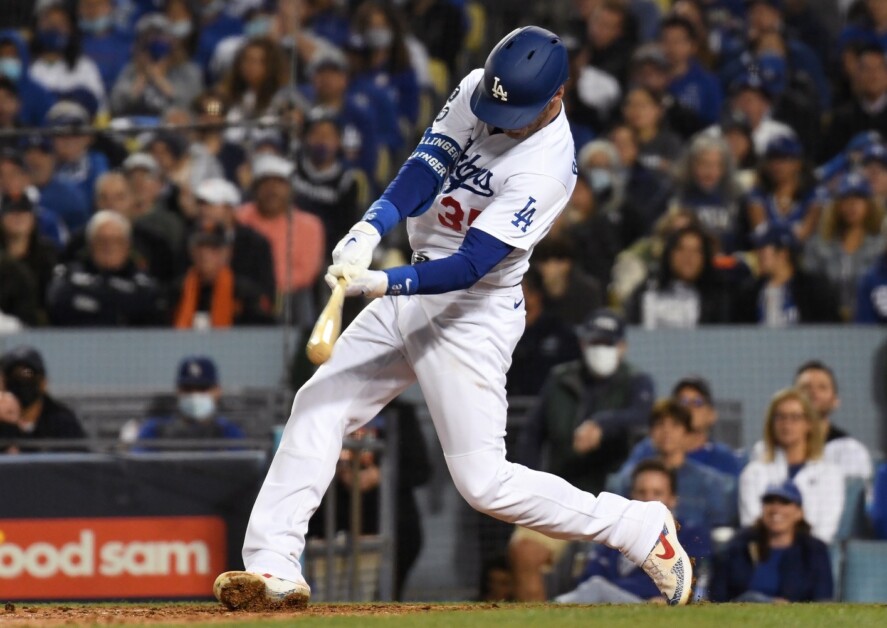
Giants Surprised Cody Bellinger Fly Ball Wasn’t Home Run - DodgerBlue.com

Like nearly every other team, the Los Angeles Dodgers have been left stunned on multiple occasions this season when a fly ball that seemingly had enough of an exit velocity and launch angle didn’t result in a home run. Such applied to Cody Bellinger on Tuesday night.

With the Dodgers clinging to a 2-1 lead in the seventh inning, Bellinger made contact off San Francisco Giants relief pitcher John Brebbia for a drive to straightaway center field. The ball had a 102.3 mph exit velocity and .790 expected batting average.

But rather than carry well past the wall for a home run, Bellinger’s drive resulted in a 390-foot flyout.

That Bellinger didn’t it a home run caught Brebbia by surprise, according to Andrew Baggarly of The Athletic:

“I thought it was going to kill someone trying to catch it in the 10th row,” said Brebbia, who declined to watch the full flight of Cody Bellinger’s deep drive in the seventh inning Tuesday night. “That’s not something I needed to see.”

Mauricio Dubón anticipated needing to make an effort at a leaping catch as he too thought Bellinger had hit a homer, per Evan Webeck of The Mercury News:

“I thought Bellinger’s ball was out,” Dubón said. “Then it looked like it hit a wall. I was getting ready to jump, and it just died at the end.”

Bellinger wasn’t alone in hitting what optically appeared to be a home run off the bat. Earlier in the game, Max Muncy made contact for a 97.8 mph exit velocity and .460 expected batting average, only for his fly ball to right field resulting in a 363-foot flyout.

Dubón had a hard line drive caught in deep left field, and Kevin Padlo’s fly ball to the left-center field gap also resulted in an out.

The empty swings further fueled suspicions with the baseballs being used this season. An independent study found the league used two different versions last year, but MLB reportedly informed teams that isn’t the case this season.

Nevertheless, balls in play do have more drag and thus don’t carry as far. Furthermore, all 30 teams are utilizing a humidor this season.

Humidors bring baseballs to an average humidity, which in a dry park means they become more humid and heavier. In humid parks, however, a humidor dries out the baseballs and makes them lighter.

Roberts thought Bellinger hit homer

Dodgers manager Dave Roberts has been among those to question the baseballs, and he also was surprised Bellinger didn’t get rewarded with a home run.

“I was surprised on the Bellinger ball. I thought Trea hit one that had a shot, I think they hit a ball to left field that had a good chance to get out,” Roberts said. “But the Bellinger ball, exit velocity and trajectory, I thought was a home run.”

Are you following Dodger Blue on Instagram? It’s the best way to see exclusive coverage from games and events, get your questions answered, and more!

Adblock test (Why?)


"ball" - Google News
May 05, 2022 at 02:05AM
https://ift.tt/FfoIunl

Giants Surprised Cody Bellinger Fly Ball Wasn’t Home Run - DodgerBlue.com
"ball" - Google News
https://ift.tt/l5mCsWy
Shoes Man Tutorial
Pos News Update
Meme Update
Korean Entertainment News
Japan News Update
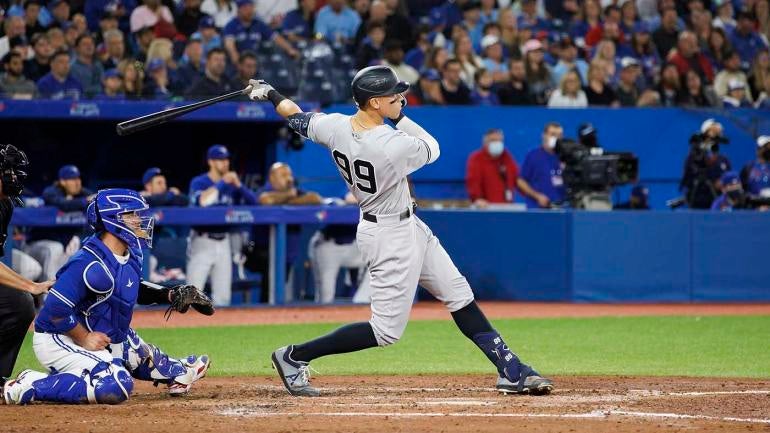
WATCH: Young Yankees fan gets emotional after Blue Jays fan gives him Aaron Judge home run ball - CBS Sports

judge.jpg
Getty Images

Going to an MLB game as a young baseball fan is always thrilling. The bright lights, the excitements of other fans around you and seeing your favorite stars in person is a treat for your senses, especially as a kid. Throw in getting a home run ball from one of your team's top players, and it is a day you will never forget.

During Tuesday night's game between the New York Yankees and Toronto Blue Jays, Yankees star Aaron Judge launched a homer into the stands during the top of the sixth inning. The ball went soaring towards a group of hopeful fans and after it dropped they scurried to pick it up.

The lucky winner of the home run ball was a Blue Jays fan. But after turning around, he saw a young Yankees fan behind him wearing a Judge shirt. He acted generously and handed the ball over.

Take a look at the sweet moment between opposing fans:

The young fan immediately gave the man a hug and got emotional over receiving the ball. The Blue Jays fan hugged him back, pointing at the kid and nodding in approval of the reaction.

After the game, Judge heard about what happened in the stands.

"That's what's special about this game," Judge said, according to MLB.com. "It doesn't matter what jersey you wear. Everybody's a fan; everybody appreciates this game. That's pretty cool. I've got to check out that video; that's special."

I have a feeling the fan will find a special spot to keep that baseball. 

The young New York fan not only got to go home with a one-of-a-kind souvenir, but also got to see his first place Yankees get their 11th consecutive win. With a 9-1 victory over the Blue Jays, the Yankees now sit at 18-6 and will look for their 12th win in a row on Wednesday when they face the Blue Jays again at Rogers Centre.

Adblock test (Why?)


"ball" - Google News
May 04, 2022 at 10:45PM
https://ift.tt/QfBihGk

WATCH: Young Yankees fan gets emotional after Blue Jays fan gives him Aaron Judge home run ball - CBS Sports
"ball" - Google News
https://ift.tt/l5mCsWy
Shoes Man Tutorial
Pos News Update
Meme Update
Korean Entertainment News
Japan News Update
Tuesday, May 3, 2022

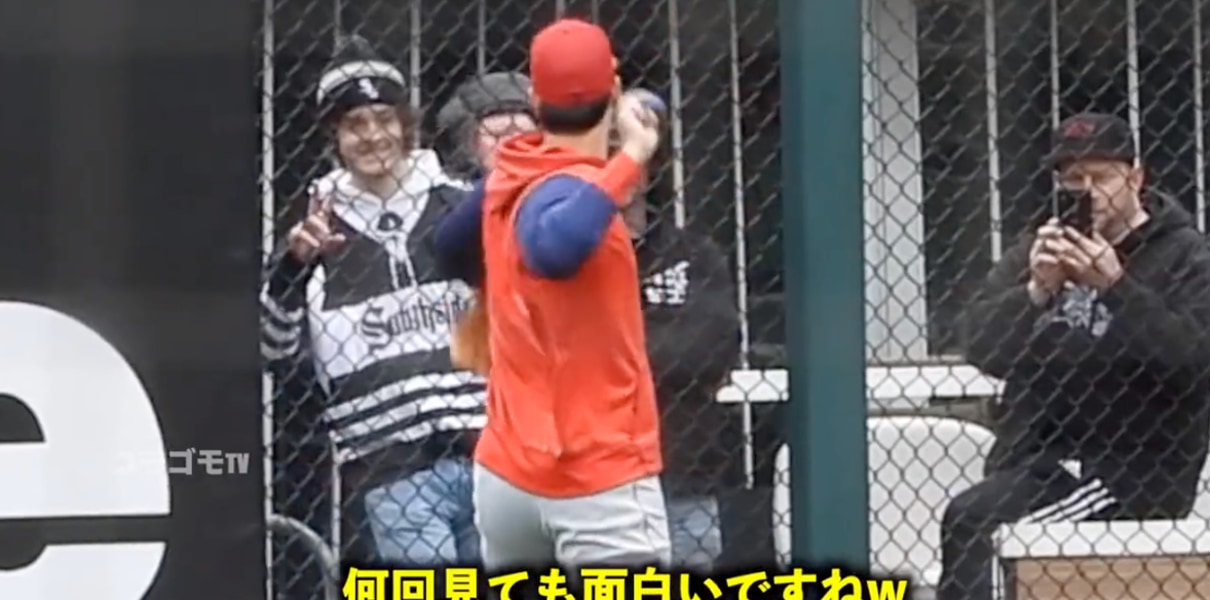
Shohei Ohtani Threw a Ball at a White Sox Fan and It Was Hilarious - bleachernation.com

Shohei Ohtani can hit, pitch, and … scare the bejeesus out of fans of the other team.

Yesterday, as he was warming up by throwing one of those weighted training balls against the outfield wall before the game, Ohtani caught the eye of White Sox fan Brandon Diamond standing against the chainlink fence. Diamond appears to give Ohtani a little smile (who wouldn’t … it’s Shohei Freakin’ Ohtani) and Ohtani responded by … chucking the baseball directly at his head. All in good fun, of course!

Take a look at the smiles all around, and the response from Diamond on Twitter:

Diamond: “that was me he threw the ball at!! scared me so bad but was easily one of the best moments of my life 😂😂.” I love how he bends over and grabs his heart afterwords. 

Is it weird that I’m jealous? I wish Ohtani would throw a ball at my head some time.

Adblock test (Why?)


"ball" - Google News
May 03, 2022 at 08:06PM
https://ift.tt/ivLJEQg

Shohei Ohtani Threw a Ball at a White Sox Fan and It Was Hilarious - bleachernation.com
"ball" - Google News
https://ift.tt/8CcBIzW
Shoes Man Tutorial
Pos News Update
Meme Update
Korean Entertainment News
Japan News Update
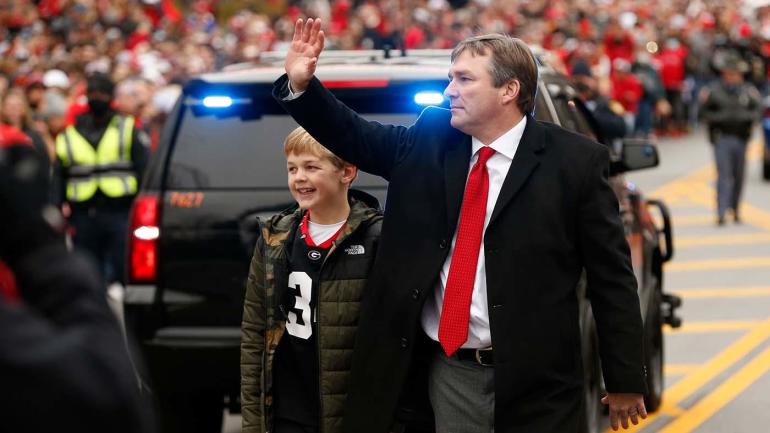
WATCH: Georgia coach Kirby Smart becomes latest victim of exploding ball prank at charity golf tournament - CBS Sports

kirby-smart.jpg
USATSI

Georgia coach Kirby Smart was pranked with a fake exploding golf ball at the Peach Bowl Challenge golf tournament outside of Atlanta. 

Smart set up to take a strong swing at the ball, but reacted with confusion as the ball instead disintegrated in front of his eyes. Laughter could be heard from the background after the prank went off without a hitch. In classic Smart fashion, his reaction was decidedly understated. 

The exploding ball has become a tradition of sorts at the annual charity golf tournament. Clemson coach Dabo Swinney was the recipient of the prank in 2018 and walked off the tee shaking his head and shouting "I knew it! I knew it!" The next year, Swinney helped pull the prank on then-Florida coach Dan Mullen. 

Luckily, the whiff hasn't hurt Smart's game much. Through nine holes, the team of Smart and Sen. Tommy Tuberville, who coached Auburn, Cincinnati and Texas Tech, are in the lead. Mullen and former Troy coach Chip Lindsey are close behind. Smart and Tuberville are both playing for their personal foundations. 

The Peach Bowl Challenge brings together 22 current and former college football coaches who pair off and compete for a share of a $330,000 prize for charity. The winning duo will split a $60,000 charity prize, with the rest of the money distributed to the other charities. 

Other pairings include South Carolina coach Shane Beamer with former Gamecocks and Gators coach Steve Spurrier, Randy Edsall with Houston Nutt, Paul Johnson with Jeff Monken and Mark Dantonio with Jim Grobe. 

Smart earned the prank after a historic season at Georgia. The Bulldogs won their first national championship in 41 years with a 33-18 victory over Alabama in the College Football Playoff. Georgia set a record with 15 picks in 2022 NFL Draft, the most ever by a school in the seven-round era. 

Adblock test (Why?)


"ball" - Google News
May 04, 2022 at 12:45AM
https://ift.tt/jtfO0Hm

WATCH: Georgia coach Kirby Smart becomes latest victim of exploding ball prank at charity golf tournament - CBS Sports
"ball" - Google News
https://ift.tt/8CcBIzW
Shoes Man Tutorial
Pos News Update
Meme Update
Korean Entertainment News
Japan News Update

Search

Postingan Populer